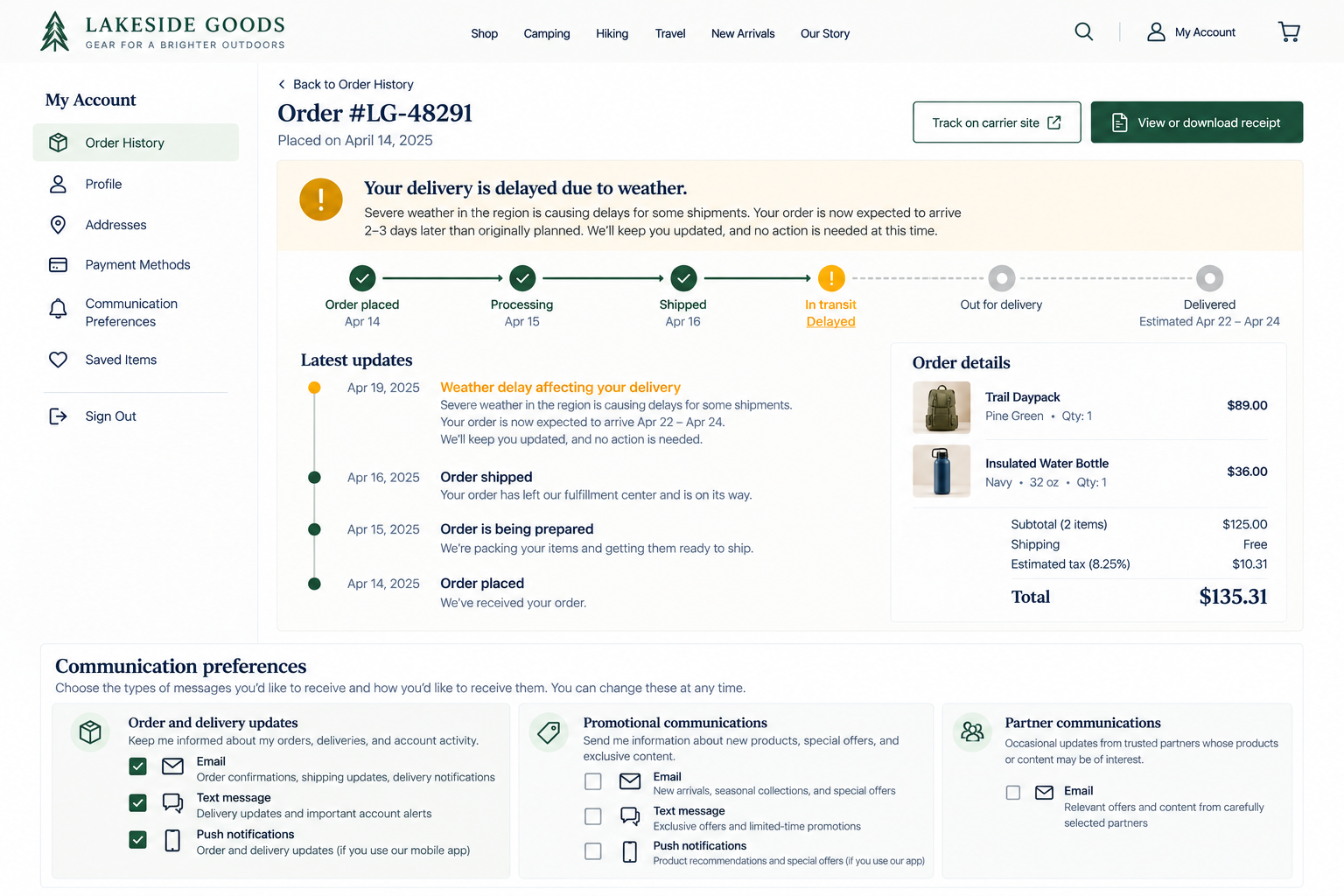
Post-Conversion Communication
Do customers receive timely, relevant updates that keep them informed while respecting their communication preferences?
A confirmation tells customers their action was successful. But for many experiences, there’s still time between conversion and completion.
An order needs to ship. An appointment is scheduled for next week. An application needs to be reviewed. A service request needs to be fulfilled. A reservation may be months away.
Customers should not be left guessing during that period. Effective post-conversion communication keeps customers updated on important changes and next steps, without flooding them with unnecessary messages.
Customers should be able to answer:
What’s happening with my order, booking, application, or request?
Has anything changed that I need to know about?
Do I need to do anything?
Can I control the communications I receive?
1. Share meaningful status updates and communicate any delays or changes clearly
UX Check: Are customers kept informed when something happens that affects what they’re expecting?
Focus on updates that matter to customers, such as shipping progress, delays, appointment changes, or requests for additional information.
Share important changes early enough for customers to respond, and clearly explain what changed, what it means, and whether they need to take action.
Avoid vague updates like Your order has been updated. Be specific about the change and, when no action is required, say so.
Clear communication means customers do not need to keep checking the website, contact support, or worry that something is wrong.
2. Respect communication preferences and consent
UX Check: Are we communicating in ways customers expect, and do they have reasonable control over optional messages?
Keep essential transaction updates separate from optional marketing communications. A purchase may justify order or delivery updates, but it doesn’t automatically mean someone wants promotional emails, texts, or notifications.
Give customers clear choices for different communication types, avoid preselected consent for optional messages, and make preferences easy to update later.
The goal is to send the right information, through the right channels, and give customers the control they expect.
Keep customers informed without overwhelming them
After a customer converts, silence creates uncertainty, and yet too many messages can overwhelm customers.
Communicate when there is something meaningful for the customer to know. Share useful status updates. Communicate delays and changes promptly. Make it clear when action is needed. Respect customers’ choices about the messages they receive.
Customers should not have to keep asking what is happening. Your post-conversion communication should help customers know where things stand and what they need to do next, if anything.
Review your website experience
Your homepage is just one part of the experience visitors have with your website.
The Website Experience Snapshot is a free resource that helps you evaluate across nine areas of your website—from your homepage and navigation to conversion, mobile, accessibility, and the overall site experience. Use it to spot where visitors may be running into friction and where improvements could make the biggest difference.